
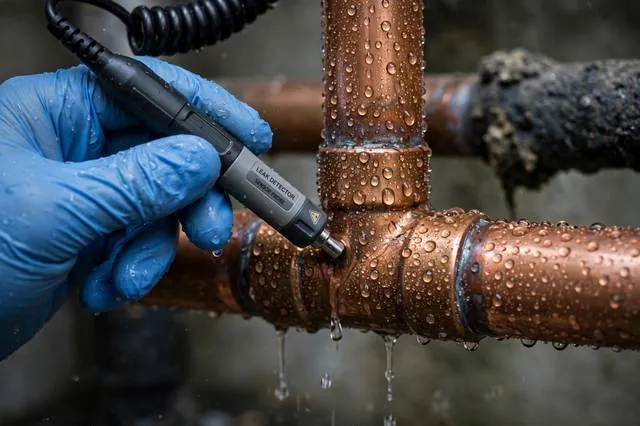
Visible Pipe Check
We look at the pipes we can reach, the joints, and the places where pipes pass through walls. Drips and stains show up here first.
A pipe visit covers the pipes we can see, the joints, and the pressure in the system. Each step below is part of that visit.
We look at the pipes we can reach, the joints, and the places where pipes pass through walls. Drips and stains show up here first.
Acoustic listening picks up escaping water, and pressure testing shows which pipe loses pressure.
You get a written account of what we found, which pipe is involved, and what the next step could be.
We talk through the repair options for the pipe that leaks, such as a joint repair or a section replacement.
Pipe leak detection finds a leak in a pipe in the home. We check the pipes we can see, listen for escaping water, and test the pressure. The aim is to find the pipe and the spot before any wall or floor is opened.
Pipes in Lakeland homes are often PVC, PEX, or copper. Joints wear, copper corrodes, and a pipe can rub where it passes through a wall. A leak in any pipe can show up far from the pipe itself, as a stain or a damp patch. These pipes belong to one system, so a leak in one run can show up in another part of the home.
A pipe visit follows four plain steps. You know what is happening at each one.
Schedule
Call +1 (863) 265-8125 and tell us what you noticed. We talk through the signs with you first.
Diagnose
We check the visible pipes and joints, listen along the runs, and test the pressure in the system.
Fix
We mark the spot where the readings point and talk through the repair options with you.
Report
You get a written account of the findings, the marked spot, and the repair options to consider.
Infrared Cameras
Warm and cool patches on a wall show where water sits behind it.
Acoustic Listening Devices
A sensor picks up the sound of water leaving a pipe. The sound is strongest near the leak.
Moisture Meters
The meter reads damp in walls and floors near a pipe run. A patch that stays damp is worth checking.
Pressure Testing Equipment
We test the pressure in a pipe run and watch the reading. A drop means water is leaving the pipe.
Acoustic Listening
We listen at points along a pipe and compare the sound. The strongest point marks the leak.
Thermal Imaging
A thermal camera scans walls and floors for temperature changes that point to water.
Pressure Testing
Each pipe run is tested on its own where possible. The run that will not hold pressure has the leak.
A ground microphone or contact sensor is placed on the pipe or on the floor above it. It picks up the sound of water escaping from the pipe, and the sound is strongest near the leak.
The sensor feeds an amplifier with filters. The amplifier makes the leak sound clearer and cuts out background noise, so the leak stands out from the other sounds in the home.
A leak correlator listens at two points along the pipe and compares the two readings. The difference between them narrows the leak to one section, so only that spot needs attention.
01
What we do: We check the stain with a moisture meter and thermal imaging, then test the pipe that runs behind it.
→ A stain that grows or stays damp points to a live leak.
02
What we do: We test the pressure in the pipe runs and check the visible pipes for drips.
→ Finding the pipe explains the bill.
03
What we do: We check the pipe and the joints around the damp patch, then test the run for a pressure drop.
→ A small drip at a joint can grow if the joint keeps wearing.
Pipes in Lakeland homes run through walls, under floors, and across yards. Older copper corrodes, joints wear, and humidity keeps damp patches damp longer. A spa has pipes of its own, at the jets and on the equipment pad, and a leak there shows as a dropping water level or a wet pad. That check is covered by spa leak detection in Lakeland. We serve homes across Lakeland, including the areas below. Pipe checks in the west of the city are covered by leak detection in West Lakeland, where we check the visible pipes and the joints first.
North Lakeland
Older pipe runs are common here. We check the visible pipes and the joints first.
South Lakeland
Rain keeps walls and floors damp, which can hide a small leak. We check patches that never dry.
Lakeland Highlands
Soil movement can stress pipes where they enter the home. We listen along those runs.
High humidity levels in summer
Damp patches dry slowly, so a small leak can stay hidden. We check patches that stay damp.
Aging infrastructure in older homes
Older pipes and joints wear over time. We test the runs that serve the oldest parts of the home first.
A leak in a pipe causes a few clear problems. Each one starts with finding the pipe.
Problem
A pipe can leak inside a wall for weeks before a stain shows.
Our Fix
We trace the damp back to the pipe and mark the spot to open.
Problem
A leaking pipe runs the meter day and night.
Our Fix
Testing each pipe run shows which one loses pressure.
Problem
A damp wall or floor near a pipe gives mold a place to grow.
Our Fix
We find the pipe that feeds the damp, so the area can dry once the repair is done.
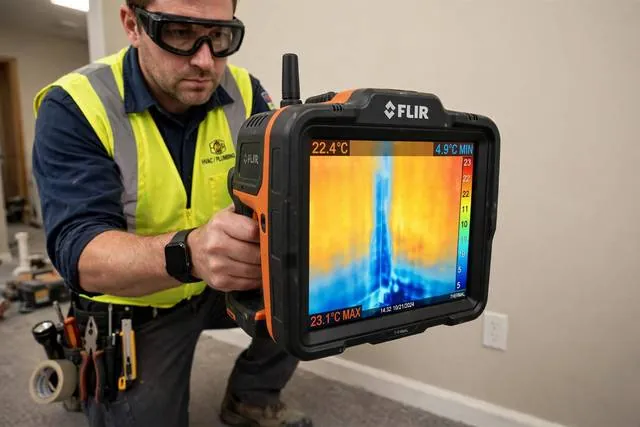
Finding the pipe is the step that makes the repair possible. These are the plain gains.
The Right Pipe, Found First
Testing each run on its own shows which pipe loses pressure. The repair can then focus on that pipe.
An Answer For The High Bill
A bill that climbs with no clear cause is hard to plan around. Finding the pipe explains it.
Less Wall Opened Up
A marked spot means the repair opens a small section of wall. The rest of the room stays as it is.
Findings You Can Follow
You get a written account of what we found and where. It is easy to follow when you talk to a repair plumber.
First, The Signs
We ask what you noticed, then look at the pipes we can see and the stains they leave.
Then, The Tests
Acoustic listening and pressure testing narrow the leak to one pipe and one area.
Last, The Findings
We mark the spot, explain what we found in plain words, and give you written findings.
Our work is finding leaks in Lakeland homes. Pipe calls are about joints, corrosion, and the runs that show the signs. A pipe is one part of the wider plumbing system, and our page on plumbing leak detection in Lakeland covers the whole system.
Answers about pipe leaks, from joints to corroded runs.
Leaks under the concrete slab of a home. Warm floor spots and damp patches are the signs.
View Slab Leak DetectionLeaks in buried lines under the yard. Listening gear finds the spot without opening the whole lawn.
View Underground Leak DetectionLeaks you cannot see, behind walls or under floors. Meters and imaging narrow the search.
View Hidden Leak DetectionLeaks across the plumbing in a home. We check the system line by line.
View Plumbing Leak DetectionLeaks in the line from the street to the house. A wet strip in the yard is the sign to watch.
View Main Water Line Leak DetectionLeaks in the water lines that feed the home. Yard signs and pressure changes point the way.
View Water Line Leak DetectionWe invite you to reach out for any Leak Detection needs. Our team is available to answer your questions and provide assistance. We typically respond within an hour.
Phone
+1 (863) 265-8125Address
3228 US Hwy 98 N, Lakeland, FL 33805, USA
Hours
Mon–Fri: 7AM – 7PM
Sat: 8AM – 4PM
Sun: Emergency Only
24/7 Emergency Available