
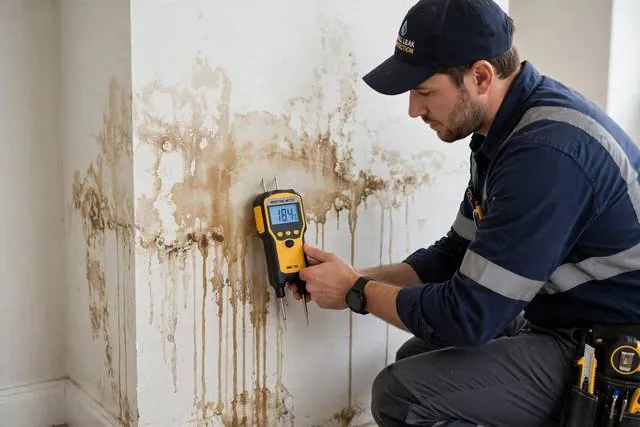
Damp Spots Checked First
We start with the damp patch, the smell, or the stain you noticed, and check the wall around it.
A wall leak check looks at the wall, finds the damp, and tells you where the leak is. Here is what is covered.
We start with the damp patch, the smell, or the stain you noticed, and check the wall around it.
Thermal imaging shows cool, damp areas. Moisture meters measure how damp the wall is.
We listen for water escaping from a pipe inside the wall, so the leak point is found without opening it.
We show you the dampest spot and the leak point, and explain what was found in plain words.
Wall leak detection finds a leak inside a wall without opening it first. Thermal imaging shows cool, damp areas, moisture meters measure the damp, and acoustic listening picks up water escaping from a pipe. That is the core of finding water you cannot see.
A pin-hole leak in a pipe can wet a wall for weeks before it shows. The first signs are a damp patch, paint that bubbles, or a mould smell in one room. If the damp is in the ceiling instead, the leak may be above it. If you cannot see any water at all, the leak is still worth checking.
Start with the water meter. Turn off every tap and fixture, then watch the meter. If it keeps moving, water is escaping somewhere in the home.
Next, isolate the fixtures one at a time. Run one fixture, then check whether the damp grows. If the damp grows after a shower, the leak is likely in a drain pipe. If it grows after any use of water, it is likely a supply pipe.
Map the damp area with a moisture meter. Take readings in a grid across the wall to trace where the damp is worst. A moisture meter confirms damp, but it cannot find the source of the leak on its own. Thermal imaging can help, but it is weak on slow leaks.
Mark the edge of the stain with a pencil and write the date beside it, so any growth is visible. Take photos of the damp area before you call. Do not drill into the wall before you know the pipe routes.
A leak inside a wall is a hidden leak, and our page on hidden leak detection in Lakeland covers how we trace leaks you cannot see.
Four steps, in order. You will know what happens at each one.
Call
Call +1 (863) 265-8125 and tell us what you see. A damp patch, a smell, or a bill that jumped.
Listen
We listen for water escaping inside the wall and check the damp with a moisture meter.
Scan
Thermal imaging shows the cool, damp area, and the leak point is marked on the wall.
Explain
We tell you what we found and where the leak is, and talk through what comes next.
Infrared Cameras
These cameras show temperature changes in the wall. A cool patch points to damp.
Moisture Meters
These meters measure damp in the wall. The highest reading points to the leak.
Acoustic Listening Devices
These devices pick up the sound of water escaping from a pipe inside the wall.
Pressure Testing
A pressure test shows whether a pipe inside the wall is losing water.
Non-Invasive Leak Detection
The wall is checked from the outside first, so it stays intact while the leak is found.
Thermal Imaging
A thermal scan shows cool, damp areas in the wall and where the damp is worst.
Acoustic Leak Detection
Listening for escaping water finds a pin-hole leak that no eye can see.
01
What we do: We check the patch with a moisture meter and thermal imaging, then listen for the leak behind it.
→ The leak point is found before the wall is opened.
02
What we do: We check the walls for damp and listen for water escaping inside them.
→ A hidden leak is found before the next bill arrives.
03
What we do: We trace the smell to the damp behind it and find the pipe that is leaking.
→ The source is found, so the wall can dry out.
Wall leak detection in Lakeland starts with the wall itself. Florida humidity keeps damp walls damp, so a small leak can wet a wall for weeks. We check the wall with thermal imaging and moisture meters, and listen for the leak, before anything is opened. If the damp is in the ceiling rather than a wall, see our page on ceiling leak detection in Lakeland.
North Lakeland
Wall leak checks for homes in North Lakeland, using thermal imaging and moisture meters.
South Lakeland
Wall leak checks for homes in South Lakeland, with the leak point found before the wall is opened.
Lakeland Highlands
Wall leak checks for homes in Lakeland Highlands, with findings explained on site.
High humidity levels year-round
Damp air in Lakeland means a small leak can keep a wall damp for weeks. A damp patch is worth checking, not ignoring.
Frequent heavy rains
Heavy rain can add water around a home and make a leak harder to spot. We trace the damp in the wall back to its source.
Three problems a wall leak causes, and how a wall leak check answers each one. In the south of the city, leak detection in South Lakeland finds the leak point before the wall is opened.
Problem
A patch that dries and returns means water is still getting in. We find the leak behind it.
Our Fix
Thermal imaging and moisture meters show where the damp is worst, and acoustic listening finds the pipe that is leaking.
Problem
Water escaping inside a wall does not show on the floor. It shows on the bill.
Our Fix
We check the wall for damp and listen for escaping water, so the leak is found before the next bill.
Problem
A leak inside a wall can smell before it shows. The smell points to damp, not to the leak itself.
Our Fix
We trace the damp to its source, so the leak is found and the wall can dry out.
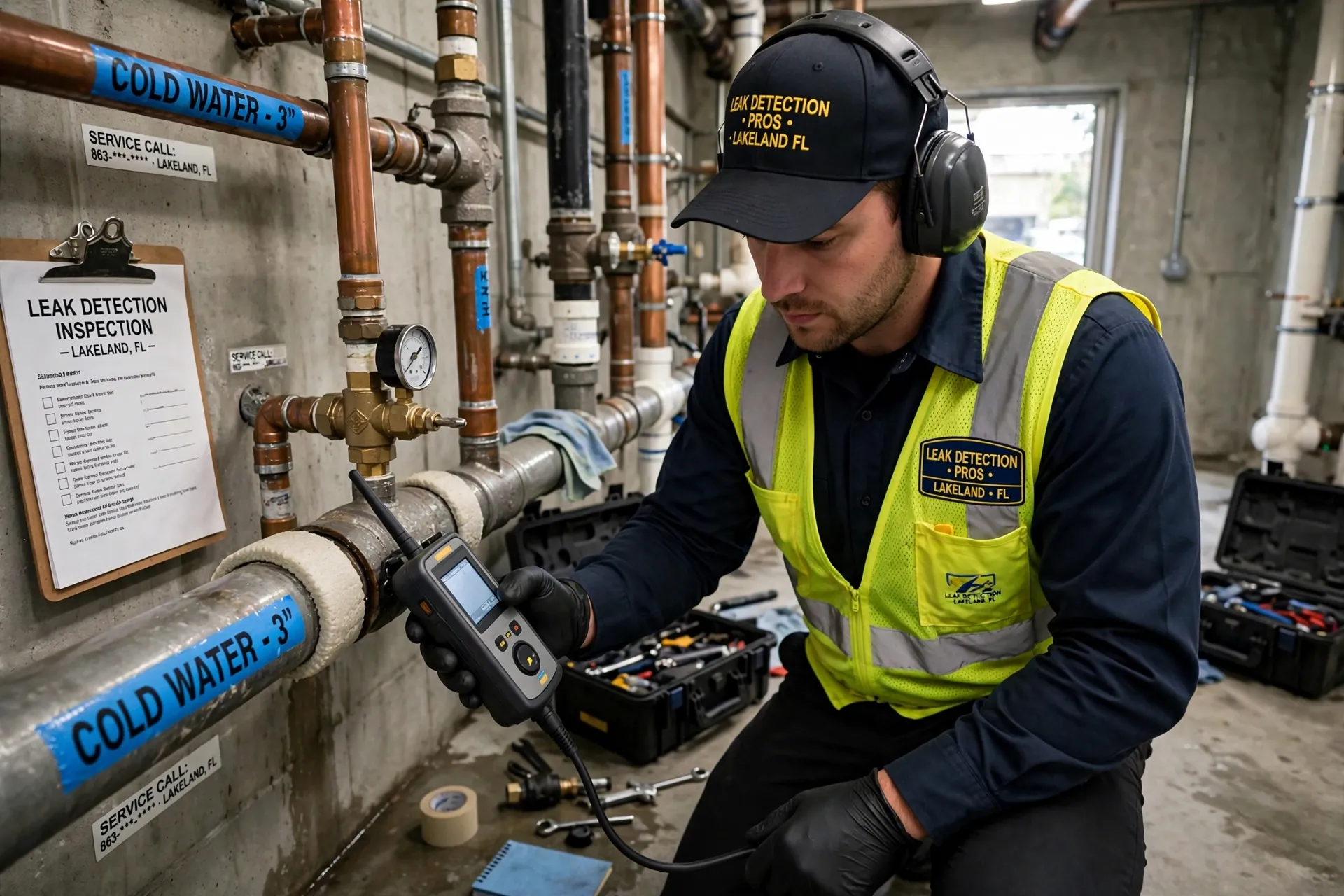
Finding a wall leak early keeps the repair area small and the wall intact. Here is what a wall leak check gives you.
A Smaller Repair Area
Finding the leak point first means only the damp area needs attention, not the whole wall.
Less Damage To The Wall
Thermal imaging and moisture meters check the wall without opening it.
A Clear Next Step
You are told where the leak is and what was found, so you can decide what comes next.
Help Any Time, 24/7
Lakeland Leak Pros answers 24/7. Call +1 (863) 265-8125 when you spot a damp patch.
Listen
Tell us what you noticed. A damp patch, a smell, or a higher bill tells us where to start.
Check
We check the wall with thermal imaging and moisture meters, then listen for the leak with acoustic equipment.
Explain
You get a clear answer: where the leak is, and what comes next.
A wall leak check is only useful if the leak point is right. Our checks are built on three tools and one habit: explain what was found. In Lakeland Highlands, leak detection in Lakeland Highlands finds the leak point before the wall is opened, and the findings are explained on site.
Questions we hear most often about leaks inside walls.
Slab leak detection identifies leaks beneath your home's foundation, preventing structural damage and costly repairs.
View Slab Leak DetectionUnderground leak detection helps locate leaks in buried pipes, ensuring your landscaping and property remain intact.
View Underground Leak DetectionHidden leak detection finds leaks behind walls and in ceilings, safeguarding your home from unseen water damage.
View Hidden Leak DetectionPlumbing leak detection focuses on identifying leaks in visible plumbing systems, ensuring your home's water lines are secure.
View Plumbing Leak DetectionPipe leak detection targets leaks in various pipe materials, including PVC and copper, to maintain your plumbing system's integrity.
View Pipe Leak DetectionMain water line leak detection identifies leaks in the primary supply line, preventing water loss and potential property damage.
View Main Water Line Leak DetectionWe invite you to reach out for any Leak Detection needs. Our team is available to answer your questions and provide assistance. We typically respond within an hour.
Phone
+1 (863) 265-8125Address
3228 US Hwy 98 N, Lakeland, FL 33805, USA
Hours
Mon–Fri: 7AM – 7PM
Sat: 8AM – 4PM
Sun: Emergency Only
24/7 Emergency Available