
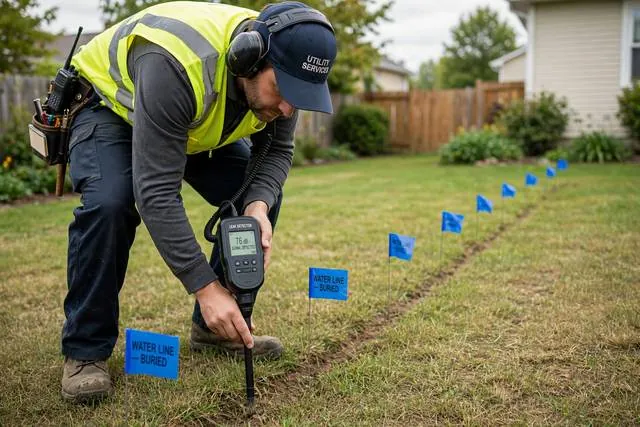
Yard And Line Walk
We walk the yard and look for wet patches, soft ground, and grass that grows faster in one spot.
An underground visit covers the yard, the buried lines, and the pressure in the system. Each step below is part of that visit.
We walk the yard and look for wet patches, soft ground, and grass that grows faster in one spot.
Acoustic listening picks up the sound of water escaping from a buried line. The loudest point marks the area to check.
You get a written account of what we found, which line is involved, and where the spot is marked.
We talk through the repair, including where to dig and how small the dig can stay.
Underground leak detection finds a leak in a pipe buried under the yard. We listen for escaping water and test the pressure in the line. The tests mark the spot, so digging starts in the right place. The wider water line work covers the lines that feed the home.
Buried lines in Lakeland face shifting soil, heavy rain, and older pipe materials. A leak can wash soil away from the line and leave a soft patch in the lawn. The main line from the street is one of the buried lines we check.
A wet patch in the yard does not always mean a supply line is leaking. If your home has an irrigation system, shut the irrigation valve and check the water meter again. If the meter stops, the leak is in the irrigation system. If the meter keeps moving, the leak is in a supply line, and the main line from the street is often the first line we check. See our page on main water line leak detection in Lakeland for that line.
A leak in another line that feeds the home needs the same tests, listening and pressure testing, to narrow it down. That wider work is covered by water line leak detection in Lakeland.
A pool that keeps losing water can also leave a wet patch in the yard, and that water is not coming from a buried supply line. That check is covered by pool structural leak detection in Lakeland.
An underground visit follows four plain steps. You know what is happening at each one.
Schedule
Call +1 (863) 265-8125 and tell us what you noticed. We talk through the signs with you first.
Diagnose
We walk the yard, listen along the buried lines, and test the pressure in the system.
Fix
We mark the spot where the readings point and talk through the repair options with you.
Report
You get a written account of the findings, the marked spot, and the repair options to consider.
Infrared Cameras
Warm and cool patches on the ground show where water sits below the surface.
Acoustic Listening Devices
A sensor on the ground picks up the sound of water leaving a buried line. The sound is strongest near the leak.
Moisture Meters
The meter reads damp in the soil. A patch that stays damp after dry days is worth checking.
Pressure Testing Equipment
We test the pressure in a buried line and watch the reading. A drop means water is leaving the line.
Pressure Testing
Each buried line is tested on its own where possible. The line that will not hold pressure has the leak.
Thermal Imaging
A thermal camera scans the ground for temperature changes that point to water below.
Acoustic Leak Detection
We listen at points along a buried line and compare the sound. The strongest point marks the leak.
01
What we do: We walk the wet area, listen along the line under it, and check the soil with a moisture meter.
→ A patch that stays wet after dry days is worth checking.
02
What we do: We test the pressure in the buried lines and check the yard for wet patches.
→ Finding the line explains the bill.
03
What we do: We check the soft area with a moisture meter and listen along the line that runs under it.
→ Soft ground over a line can mean water is washing the soil away.
Buried lines in Lakeland run through soil that shifts with rain and dry spells. Older copper and PVC lines wear, and a leak can go unseen until the yard shows it. We serve homes across Lakeland. See our Lakeland leak detection service areas for the areas we cover.
North Lakeland
Older buried lines are common here. We walk the yard for wet patches first.
South Lakeland
Soil here can shift after heavy rain. We listen along the lines where the ground stays soft.
Lakeland Highlands
Longer buried runs serve the larger lots here. We check the whole run, not just the wet patch.
High humidity levels
Damp soil stays damp, so a small leak can stay hidden. We check patches that stay wet after dry days.
Soil erosion
Rain moves soil around buried lines and can expose a weak joint. We look for fresh wet patches after storms pass.
A leak in a buried line causes a few clear problems. Each one starts with finding the line.
Problem
Water from a buried line can pool, soften the ground, and kill the grass in one patch.
Our Fix
Listening along the line under the wet patch marks the spot to open.
Problem
A buried line that leaks runs the meter day and night.
Our Fix
Testing each buried line shows which one loses water.
Problem
Water washing soil away from a line leaves soft ground and a dip in the lawn.
Our Fix
We mark the spot, so the dig can stay small and the rest of the yard stays as it is.
Finding the line is the step that makes the repair possible. These are the plain gains.
A Smaller Dig
A marked spot means the dig starts in the right place. Less lawn comes up, and less of the yard is disturbed.
The Right Line, Found First
Testing each buried line on its own shows which one loses pressure. The repair can then focus on that line.
An Answer For The High Bill
A bill that climbs with no clear cause is hard to plan around. Finding the leak explains it.
Findings You Can Follow
You get a written account of what we found and where. It is easy to follow when you talk to a repair plumber.
First, The Signs
We ask what you noticed, then walk the yard and look for wet patches and soft ground.
Then, The Tests
Acoustic listening and pressure testing narrow the leak to one line and one area.
Last, The Findings
We mark the spot, explain what we found in plain words, and give you written findings.
Our work is finding leaks in Lakeland homes. Underground calls are about the yard, the buried lines, and the soil that hides them.

Answers about buried lines, from wet yards to digging.
Leaks under the concrete slab of a home. Warm floor spots and damp patches are the signs.
View Slab Leak DetectionLeaks you cannot see, behind walls or under floors. Meters and imaging narrow the search.
View Hidden Leak DetectionLeaks across the plumbing in a home. We check the system line by line.
View Plumbing Leak DetectionLeaks in the pipes themselves, from worn joints to corroded runs. We test the pipe that shows the signs.
View Pipe Leak DetectionLeaks in the line from the street to the house. A wet strip in the yard is the sign to watch.
View Main Water Line Leak DetectionLeaks in the water lines that feed the home. Yard signs and pressure changes point the way.
View Water Line Leak DetectionWe invite you to reach out for any Leak Detection needs. Our team is available to answer your questions and provide assistance. We typically respond within an hour.
Phone
+1 (863) 265-8125Address
3228 US Hwy 98 N, Lakeland, FL 33805, USA
Hours
Mon–Fri: 7AM – 7PM
Sat: 8AM – 4PM
Sun: Emergency Only
24/7 Emergency Available